
Sex Offender Checks in Lincoln County
The Georgia Sex Offender Registry is the main public channel for a Lincoln County check. The Georgia Bureau of Investigation manages the central data, while the Lincoln County Sheriff collects and verifies local registration information. That division matters. GBI presents the statewide search and profile, but the sheriff is the right source for current reporting instructions or a suspected local compliance issue.
Start with more than one identifier when possible. A name search can distinguish a known person, while a county, Lincolnton, ZIP, or address search can support neighborhood awareness. GBI warns that source agencies submit data that changes often, so a profile should be read with its last update, aliases, status, offense jurisdiction, and address type. A blank result does not prove that no registrant exists. Spelling, the chosen county, and update timing may affect the response.
Lincoln Sheriff Verifies Registry Records
Lincoln County registrants report through the Sheriff's Office at 145 School Street in Lincolnton. Call the Lincoln County Sheriff at 706-760-7545 before visiting to confirm current appointment hours and reporting steps. The public county page does not provide a separate registry appointment calendar, online local list, or proximity-alert app.
Lincoln County Sheriff
145 School Street
Lincolnton, GA 30817
706-760-7545
Call for registration instructions or to report a suspected stale local address.
The sheriff verifies local facts; GBI publishes the state view. A reader who spots a conflict should not try to resolve it in person. Give the sheriff the profile identifier, the fact that appears stale, and a safe way to follow up. Call 911 only for an emergency. Routine tips and questions should use official law-enforcement channels.
How to Search the Georgia Registry
The official portal supports both person-based and place-based searches. Use the narrowest facts that are known, then broaden them if the first query fails. Exact radius choices and controls can change, so rely on the live interface rather than a saved screen.
- Open the GBI registry, read its accuracy and use warning, and enter a name or location.
- Select Lincoln County or enter Lincolnton, a ZIP code, or an address when a local view is needed.
- Review list and map results for the right identity, aliases, status, and address type.
- Open the full profile and check the offense, jurisdiction, classification, registering agency, and last update.
| Search field | How it helps |
|---|---|
| First and last name | Finds a known person; spelling and aliases can affect a match. |
| Offender ID | Targets an exact registry identifier when known. |
| County or city | Select Lincoln County or use Lincolnton for a local query. |
| ZIP code or address | Supports place-based review where the live portal permits it. |
| Radius | Broadens an address search by the distance choices then displayed. |
| Map or list | Changes how the same result set is viewed. |
Broaden a Lincoln County Search
If no result appears, remove fields one at a time. Try the last name without a first name, check an alias, switch from Lincolnton to Lincoln County, and verify that the county selection did not reset. GBI's own guidance notes that a wrong name or county can prevent a result. A broader query can reveal a match that an exact but stale address missed.
For someone who may have moved from Georgia, use the National Sex Offender Public Website. NSOPW searches participating jurisdictions and routes users back to the source registry. It adds a cross-state layer, but it does not replace the Lincoln County Sheriff for local verification. CAPTCHA and site terms may apply.
The national public search interface is shown in the official NSOPW source.
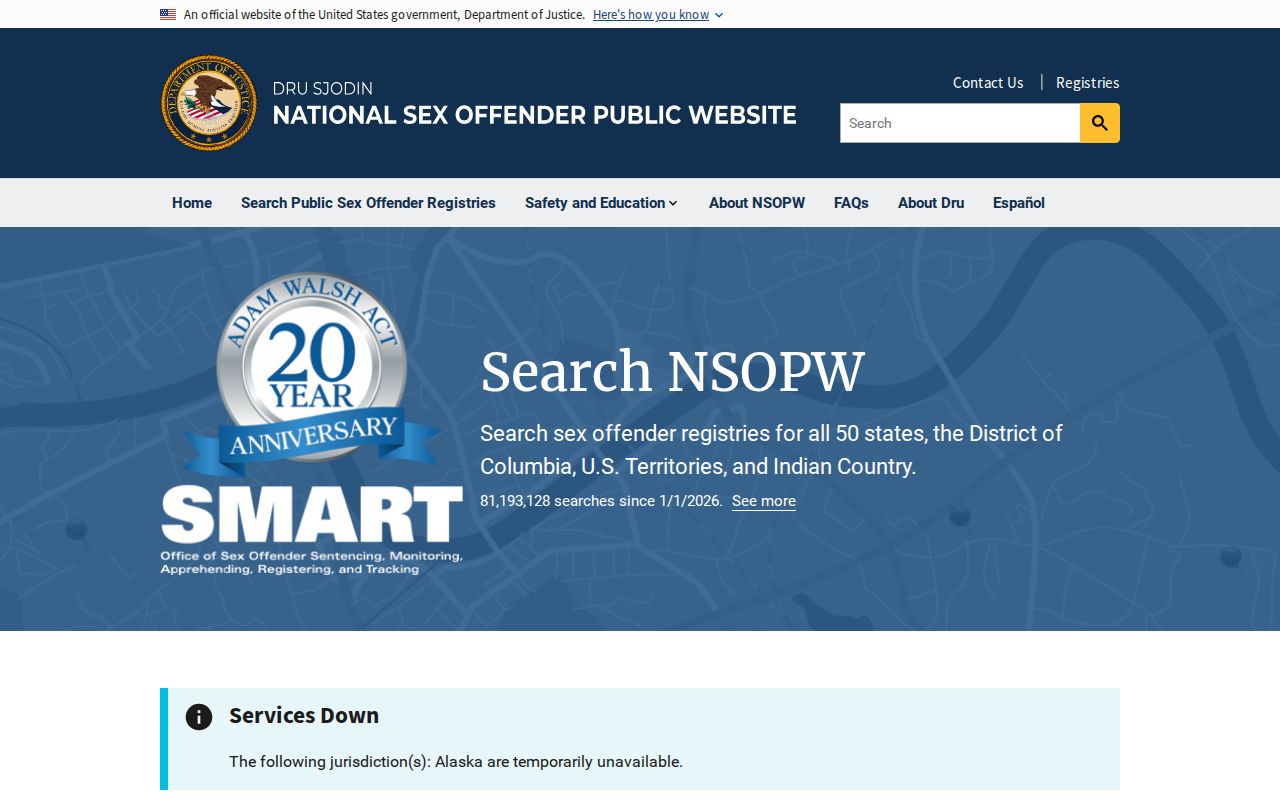
That screen is useful after a Georgia-only query, especially when the person's current state is uncertain.
Inside a Lincoln County Registry Profile
A profile is more than a map marker. Identity details help separate people with similar names, while offense and update fields explain why the record exists and how current it may be. Do not copy a profile into a static dossier. Addresses, photographs, and compliance status can change, and the official live record is the sound source for safety planning.
| Identity | Name, aliases, photograph, offender ID, and public demographic descriptors. |
|---|---|
| Address | Residence and, where law and data allow, work or school addresses. |
| Offense | Conviction offense, date, statute or description, and jurisdiction. |
| Classification | Risk designation, including sexually dangerous predator when applicable. |
| Physical details | Height, weight, hair and eye color, and scars, marks, or tattoos. |
| Other identifiers | Vehicle information when collected and publicly displayed. |
| Status | Registration status, last update, verification details, registering agency, and any reported noncompliance. |
The official GBI registry overview explains the state's authority and links to current public data.
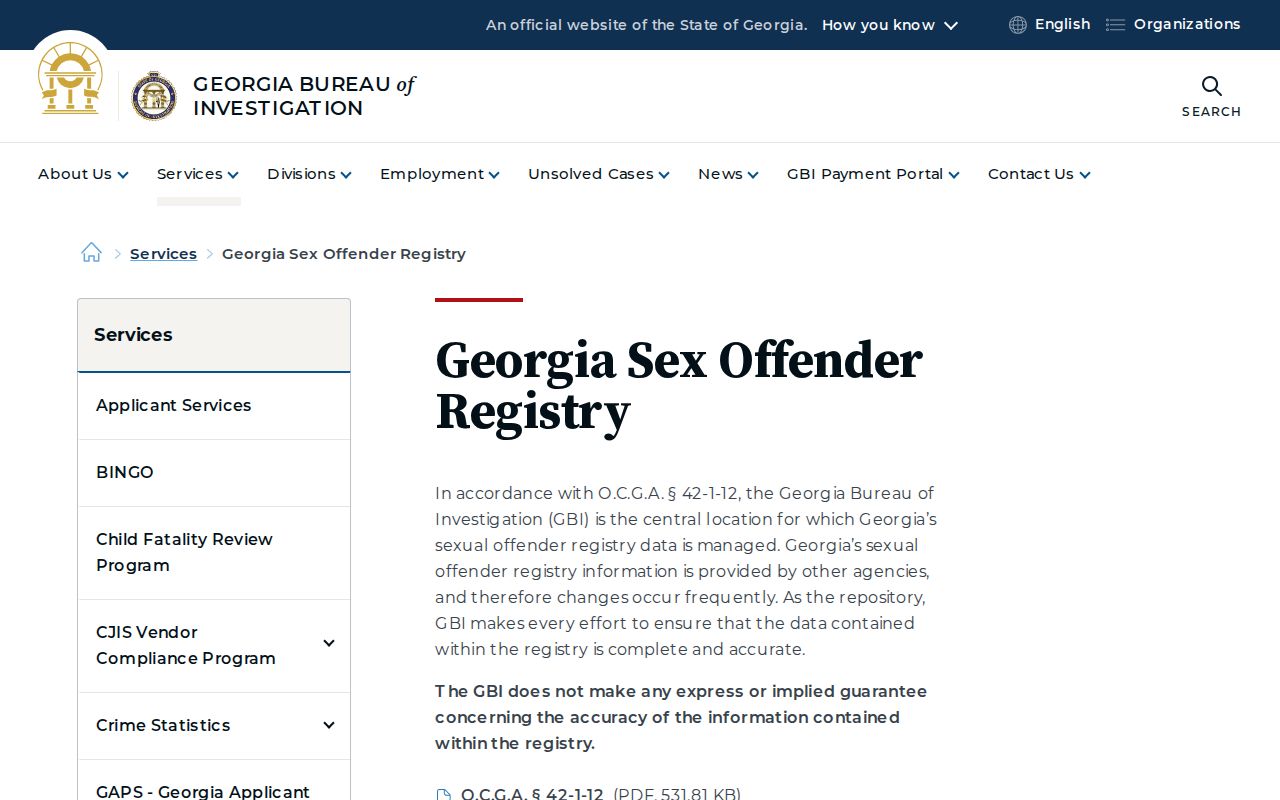
The overview helps distinguish GBI's statewide management role from the sheriff's local verification work.
Read Lincoln Registry Fields Together
Three fields deserve a combined reading: aliases, offense jurisdiction, and update date. An alias can explain why a name query failed. The jurisdiction shows where the conviction arose, which may not be Lincoln County or even Georgia. The update date helps frame how recently the source agency changed the profile, but it is not a promise that every fact was checked on that date.
Address type also matters. A residence, work location, and school location answer different questions. Distance alone says nothing about current conduct or risk. Check the registration status and classification language before drawing a conclusion, and remember that GBI expressly warns the information may be incomplete or inaccurate because agencies supply changing data.
Georgia Registration Levels and Requirements
Georgia does not use a simple public federal Tier I, II, and III expiration scheme. The Sexual Offender Registration Review Board may assess risk as Level I, Level II, or sexually dangerous predator. Registration duties arise under O.C.G.A. §42-1-12 and generally fit a lifetime framework, though state law provides court petition routes for some qualifying people. A missing public level does not mean there is no duty to register.
| Designation | Meaning | Reporting and duration |
|---|---|---|
| Level I | Board-assessed low risk | Registration continues unless qualifying court relief is granted. |
| Level II | Board-assessed moderate risk | Registration and notification effects follow Georgia law. |
| Sexually dangerous predator | Highest statutory designation | Additional six-month sheriff verification and monitoring apply as law provides. |
| Unclassified | Assessment absent or pending | Registry duty can still exist without a completed board label. |
A person's own release eligibility calls for the current statute, court record, and legal advice. It should never be inferred from a federal tier chart.
Lincoln County's 1,000-Foot Rule
Georgia's location restrictions in O.C.G.A. §42-1-15 include 1,000-foot rules for specified places. Their reach can turn on conviction date, the kind of activity, later amendments, and court decisions. A pin near a school, park, or other place does not by itself prove a violation. The registry is not a zoning opinion.
Anyone assessing their own compliance should use the current law and obtain advice tied to the actual dates and facts. Neighbors should report a concrete concern through the sheriff instead of measuring a map and confronting a registrant. The local office can determine whether a fact should be checked.
GBI Data Changes Often
GBI states that registry information comes from source agencies and changes frequently. That warning is central to a sound Lincoln County sex offender search. Save the profile identifier and note the time of review, yet return to the live record before acting on the information. A static screenshot can be out of date even when it was accurate when captured.
The public search itself can be reviewed through the official Georgia registry.
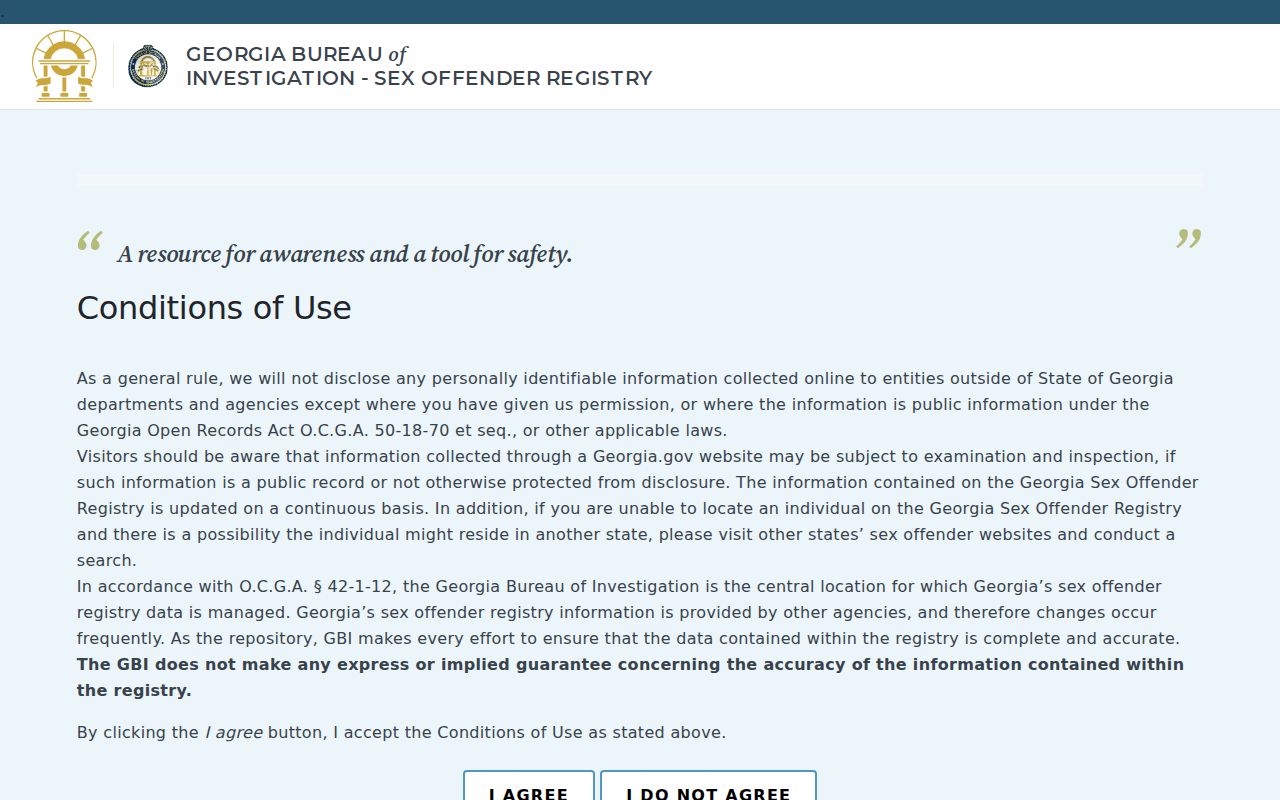
The live form remains the best place to confirm current controls, search choices, and source warnings.
Community Notification and Lawful Use
Registry information supports awareness, family safety plans, and reports to public officials. It does not authorize harassment, threats, trespass, discrimination, or vigilantism. Do not contact a registrant or household to test an address. If a Lincoln County profile seems stale or shows a possible compliance concern, pass the facts to the sheriff and let law enforcement assess them.
Use the registry lawfully: O.C.G.A. §42-1-12 warns that using registry information to commit a crime or harass an individual is prohibited. Never threaten, intimidate, or confront a registrant or household.
Community notice is most useful when it stays fact based. Read the whole profile, check the date, use the official source, and report concerns through the proper channel.